Our bayberries have set fruit: from rice-grain size to ripe in December
In late September the bayberry flowers at Pude Natural Farm in Silvan have finished, and the trees are now covered in small green fruit. Here's how bayberries grow from flower to ripe fruit in December, and what this unusual fruit actually is.

Spring has arrived in Melbourne. After a run of rainy days on the hill in Silvan, the flowers in our bayberry orchard have finished and the branches are now dotted with clusters of small green fruit.

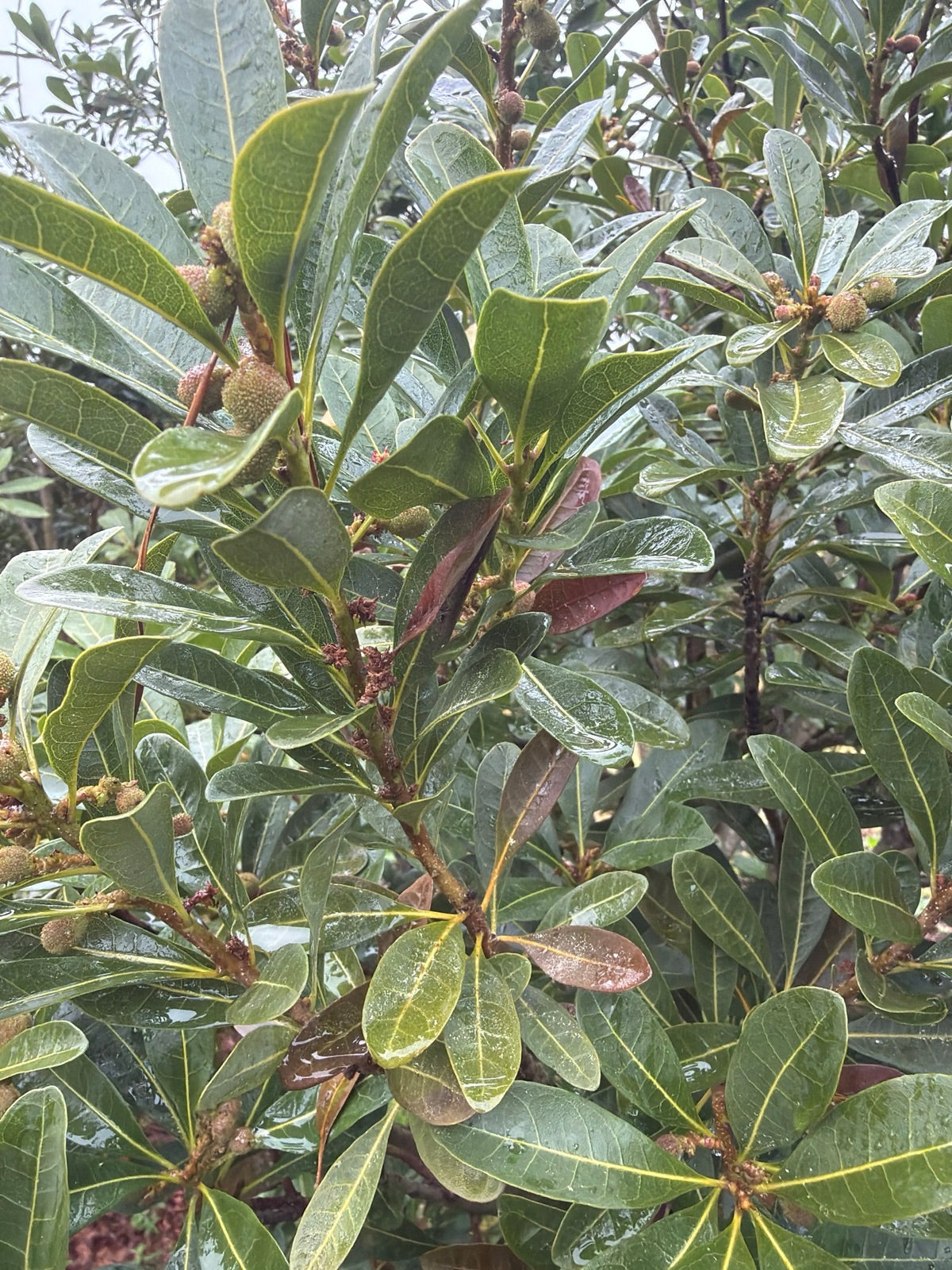
Mid September: the red flower spikes have just finished and the fruit is the size of a grain of rice.
What are bayberries?
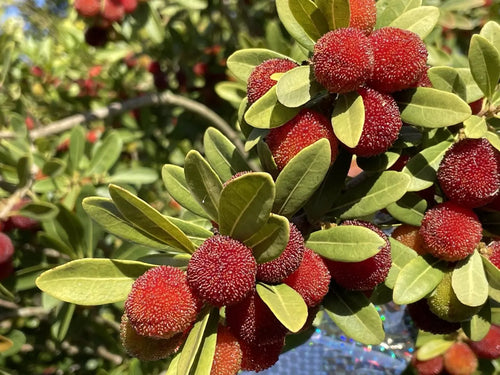
Bayberries (also called Chinese bayberries or red bayberries) come from southern China, where they have been grown for more than 2,000 years. They're a summer favourite for many Chinese families. The fruit is round, about the size of a large cherry, with a bumpy surface made of tiny juicy beads and a single stone in the middle. There's no skin, and when fully ripe the colour goes from red to a deep purple-black. The flavour is sweet and tangy, a little like a cross between a raspberry and a ripe cherry.
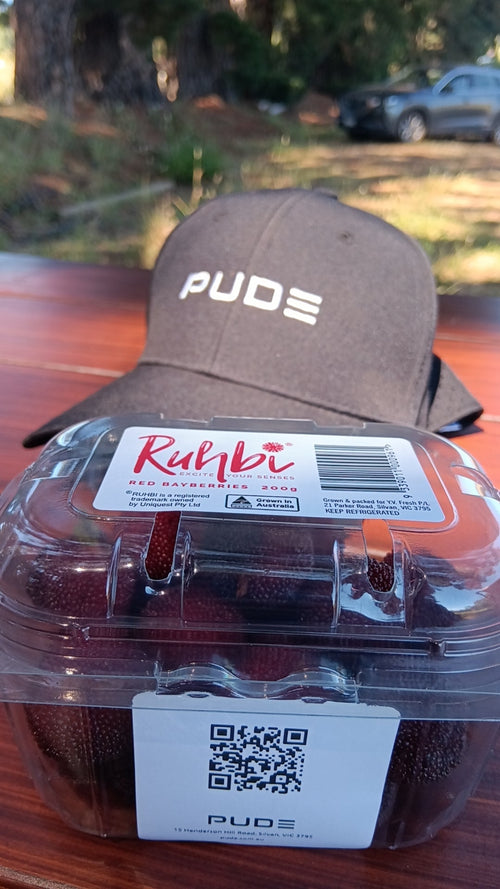
Because there's no skin to protect them, bayberries are very delicate. They're best eaten the day they're picked and don't travel well, which is why you rarely see them fresh in Australia. Only a handful of farms grow them commercially here.
Our trees produce a dark variety that ripens to almost black, with fruit about 2 to 3 cm across, high sweetness and a small stone.
From flower to fruit: the timeline
- August to September: flowering. Bayberry flowers are small red spikes rather than showy blossoms. They're pollinated by the wind and by the bees we keep on the farm.
- Late September: fruit set. The tiny fruit left behind after flowering grows a little every day. The biggest are now the size of a pea, with a fine bumpy surface.
- October to November: sizing up. The fruit stays green and slowly swells. The trees naturally drop some fruit during this time, and the ones that stay grow better.
- December: colouring. The fruit turns red first, then gradually deepens to purple-black.
- Mid to late December into January: ripe. We only pick fruit that has fully ripened on the tree. It's the busiest and happiest time of our year.

Late September, after the rain: the green fruit is now about the size of a pea.
How we look after the trees
We don't use chemical pesticides or synthetic fertilisers. The trees are fed with animal manures such as sheep manure. Spring brings plenty of rain, so lately we've been keeping an eye on drainage in the orchard so the roots don't sit in water. In December we'll also need to protect the fruit from heatwaves and from hungry birds.
We'll keep sharing how the bayberries are coming along over the next few months, with more photos once the fruit starts to colour.
If you'd like to hear from us as soon as picking opens, you can leave your email here.