What Are Bayberries? The Fruit With No Skin, and Where to Try One in Melbourne
Bayberries have no skin, just tiny juicy bumps packed around a single stone. Here's what they look like, what they taste like, why you'll almost never see them in shops, and how a year unfolds in our Melbourne orchard.

If you've never seen a bayberry, you're in good company. When Australian researchers ran consumer focus groups in Queensland in 2008, not one of the 61 tasters had ever eaten one.
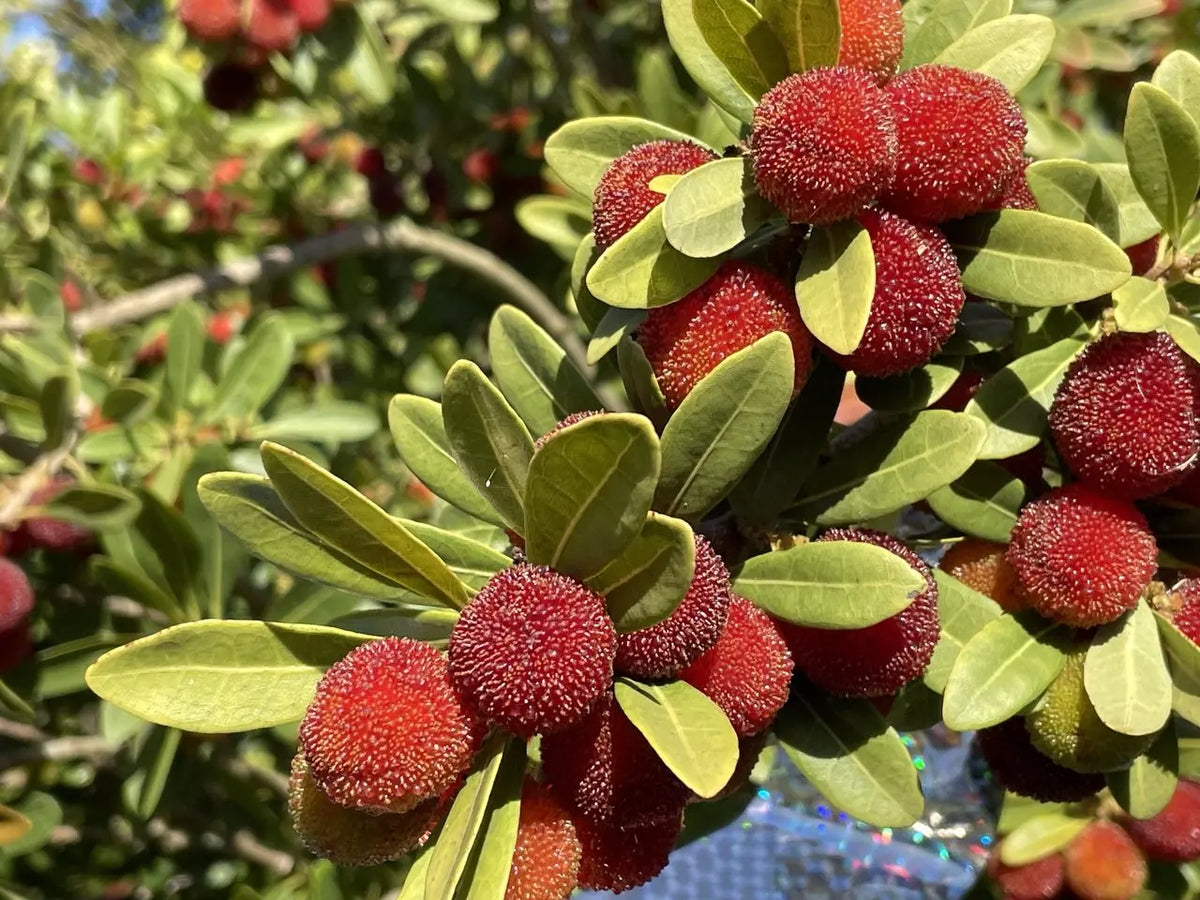
So picture this. Something about the size of a big cherry, deep red to almost black, its surface covered in tiny glistening bumps. You bite in and there's no skin to get through, just juice, and a single hard stone in the middle. We grow them on our farm in Silvan, in Melbourne's outer east.
See the Bayberry Picking Pass (tickets) → Not open yet? Get notified when picking opens.
What exactly is a bayberry?
It's the fruit of an evergreen tree from southern China. Archaeological finds at Hemudu, a Neolithic site in Zhejiang province, suggest people have been growing them for at least 7,000 years.
The trees come as boys and girls. Only female trees bear fruit. Male trees just flower, and the wind carries their pollen across. Here in Melbourne the fruit ripens in December, and when Australian focus groups were asked what to call it, several linked it to Christmas and said it looked like little tree decorations.
Why doesn't it have a skin?
Look closely and those bumps turn out to be the tips of tiny juice-filled segments. The fruit's outer layer grows into a mass of little columns, packed together and radiating out from the stone. There's no peel to take off, because the flesh is the outside. A Chinese herbal written about a thousand years ago put it in a few words: flesh around the stone, no skin or shell.
What does it taste like?
Sweet and tart, and how much of each depends on the day you pick it. An old Chinese saying puts it neatly: very sour when green, like honey when ripe.
Our notes from last season tell the same story. In mid-December we tasted deep-red berries and wrote down "still tart". Less than ten days later they had turned purple-black and our notes read "very sweet, lovely to eat." That colour change is the distance between tart and sweet.
If you've never had one, think of a mulberry. Australian taste panels who had never seen the fruit called it berry-like, especially like a mulberry: juicy, with a pleasant balance of sugar and acid and a texture unlike anything else.
How do you eat one?
Like a cherry. Pop it in whole, eat the flesh off the stone, and spit the stone out. With little ones, take the stone out first.
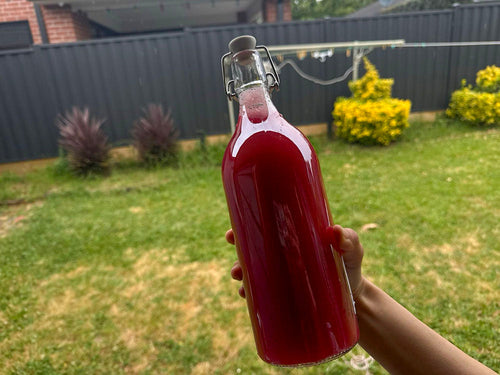
Keep them cool and don't wash them until you're ready to eat. If you have too many, they freeze well spread out in a single layer, and they make lovely juice (see our bayberry juice guide).
Why can't I buy them at the shops?
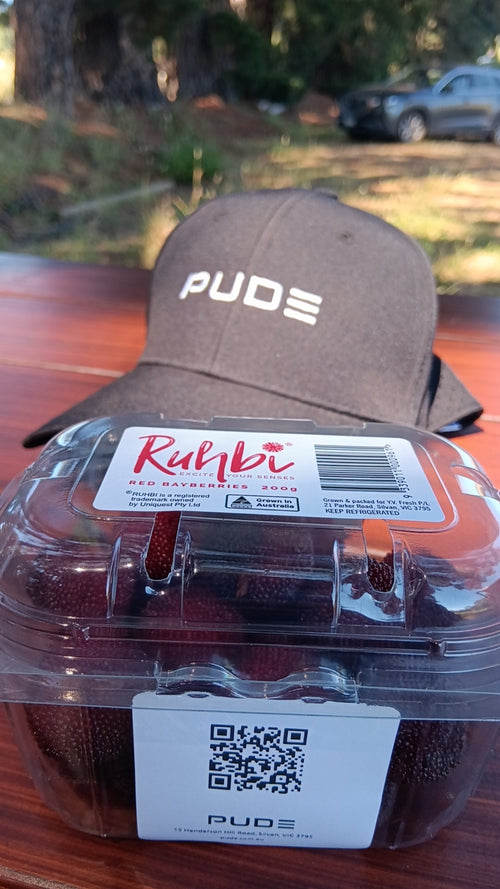
Because they're about as fragile as fruit gets. A bayberry stops ripening the moment it leaves the tree, so it has to be picked fully ripe, and a ripe berry with no skin breaks down fast. Australian researchers stored ripe bayberries for 15 days. At 1°C, only 2.5% had gone bad. At 5°C, roughly the temperature of a refrigerated truck, 67.5% had. In China, fresh bayberries at market have to be sold within two or three days.
Something few people know: more than ten years ago, a government-funded research project trialled bayberries at six sites along Australia's east coast, and our orchard was one of them. A small tasting in New Zealand used fruit from the Silvan trial site, and the words that came back were "sweet", "unusual", "refreshing" and "subtle".
A year in our orchard


How to tell when they're ripe


A bayberry won't get any sweeter once it's picked, so timing is everything. Here's what we look for:
- Colour. On our main trees, a ripe berry is purple-black, deep and even, and darkest on the side facing the sun.
- Surface. The tiny bumps should look plump and glossy. If a berry is a dull orange-grey and the bumps look pale and dried out, that isn't ripeness. It's sunburn, which we wrote about in "Even Bayberries Need Sun Protection in Melbourne".
- Feel. Hold it from underneath and give a gentle twist. A ripe one comes away easily. If it doesn't, leave it a few more days.
Two more tips from growers in China: don't rush to pick after rain, because wet fruit spoils quickly, and pick in the cool of the morning or late afternoon.
Questions people ask
Where can I try fresh bayberries in Melbourne?
Our orchard is in Silvan, about an hour's drive from the CBD, and we open for picking in bayberry season. Our guide to picking bayberries in Melbourne covers what to know before your first visit.
When is picking season?
Last year the fruit started turning purple-black in mid to late December, and picking ran for about a month. The opening date depends on December's weather and the colour of the fruit. We email everyone on our list first, and you can leave your email here.
Should I soak them in salt water?
In China many people do. Whether ours need it is covered in our guide to choosing, washing and storing bayberries.
One last thing
People have been growing this fruit on the hillsides of southern China for thousands of years. Now it turns dark every December on a hillside in Melbourne's outer east. Come and try one straight off the tree. For most people, it'll be their first.
Generated by Pude AI Manager, our in-house farm AI management system built on Anthropic's Claude, which runs our farm's production, operations and customer service – from weather and field records, plots and harvests, to orders, customers, email and scheduling. Every fact is traceable to our original records, and each article is reviewed by our family before publication.