How to choose, wash and store bayberries
What does a ripe bayberry look like? Do you need to soak them in salt water? How long do they keep? A few things we've learned in our own orchard.

When we opened the orchard for the first time last December, one family turned up with an ice pack and a bowl of iced water. They dipped each bayberry in the water before eating it, and their toddler, just over one, ate more than twenty. That was the day we learned a new way to enjoy them.
Over the year, people have asked us three things more than anything else: how to pick them, whether to soak them, and how long they keep. Here is what we've learned in our orchard.
How to choose
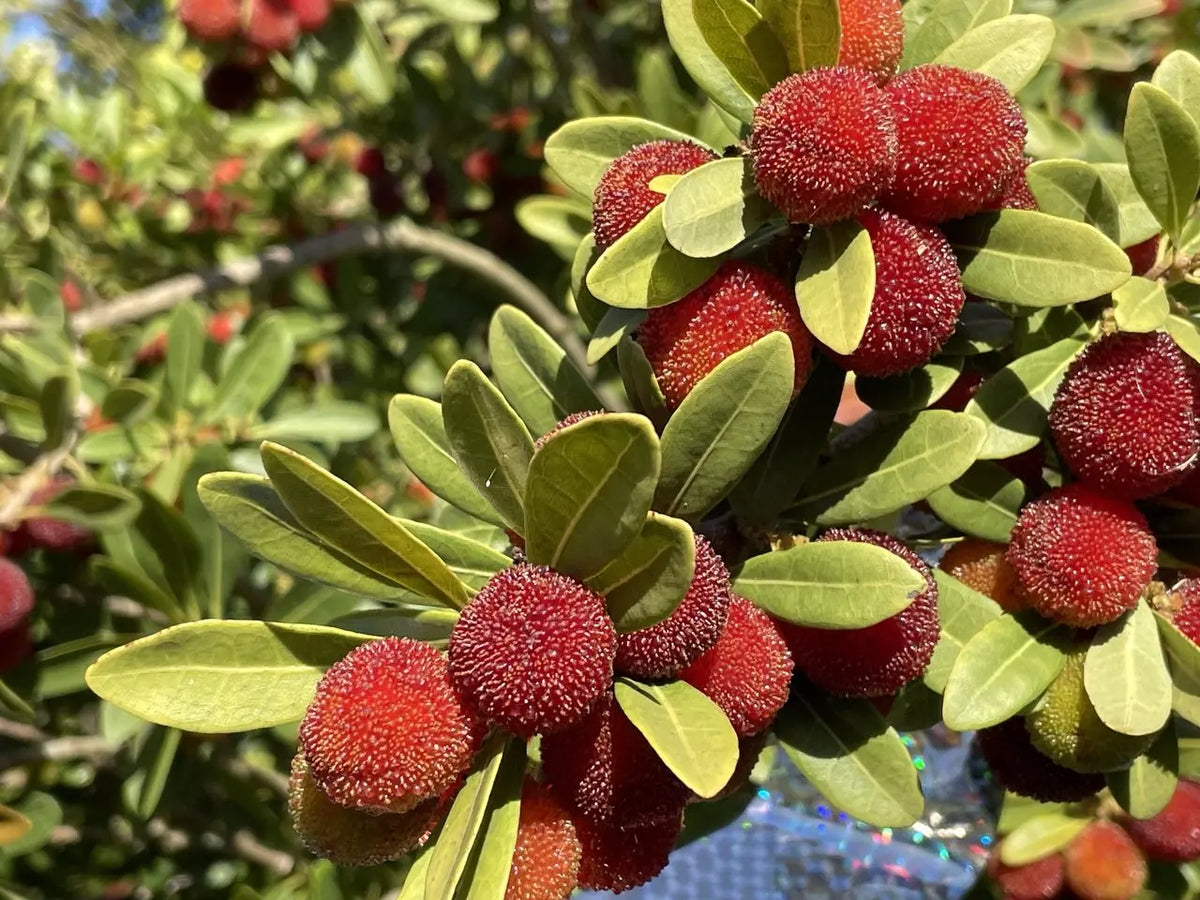
A fully ripe bayberry is a deep purple-black, not red. Look closely and the tiny bumps on the surface are plump and glossy, almost bursting. It should feel slightly springy in your hand, not soft or leaking juice.
If you're picking from the tree, go for the darkest fruit on the sunny side. Ripe berries drop at the lightest touch, so cup your hand underneath rather than pulling.
Do they need a salt-water soak?
In China, people usually soak bayberries in salt water first, because the fruit there often has tiny white grubs inside. They are the larvae of the spotted wing drosophila, a fly that can lay its eggs in perfectly sound, ripe fruit.
That fly isn't found in Australia. It is listed as one of the country's priority exotic pests and has never become established here. The common fruit flies here only lay their eggs in fruit that is already damaged or rotting, so they can't get into a whole, healthy bayberry. Last season we didn't find a single grub in our bayberries.
So our bayberries don't need soaking. A gentle rinse under cold water is enough. If you like, a few minutes in lightly salted water softens the tartness a little. It's up to you.
How long do they keep?
Bayberries have no skin, which makes them one of the most delicate fruits around. Our advice:
- Eat them the same day for the best flavour.
- Don't wash the ones you're saving. Spread them out in a single layer, keep them in the fridge, and eat them within two or three days. Rinse just before eating.
- To keep them longer, freeze them: wash, dry, freeze them spread out on a tray, then bag them. Eaten half-thawed on a hot day, they're like a sorbet.

Some visitors make bayberry wine. A few of our first guests filled their baskets to take home for exactly that: layer bayberries and rock sugar in a glass jar, top up with spirits, seal it, and leave it somewhere cool for about a month.

One last thing
This year's trees are already covered in green fruit, and they should start turning black from mid to late December. When you visit, pick the darkest one you can find and taste it under the tree. You'll see why we say it doesn't need a soak.
— As told by George, written up by Pude AI Manager